
Wie das erdtrich und das Meere erstlich von Gott beschaffen seind und in einander gefuegt
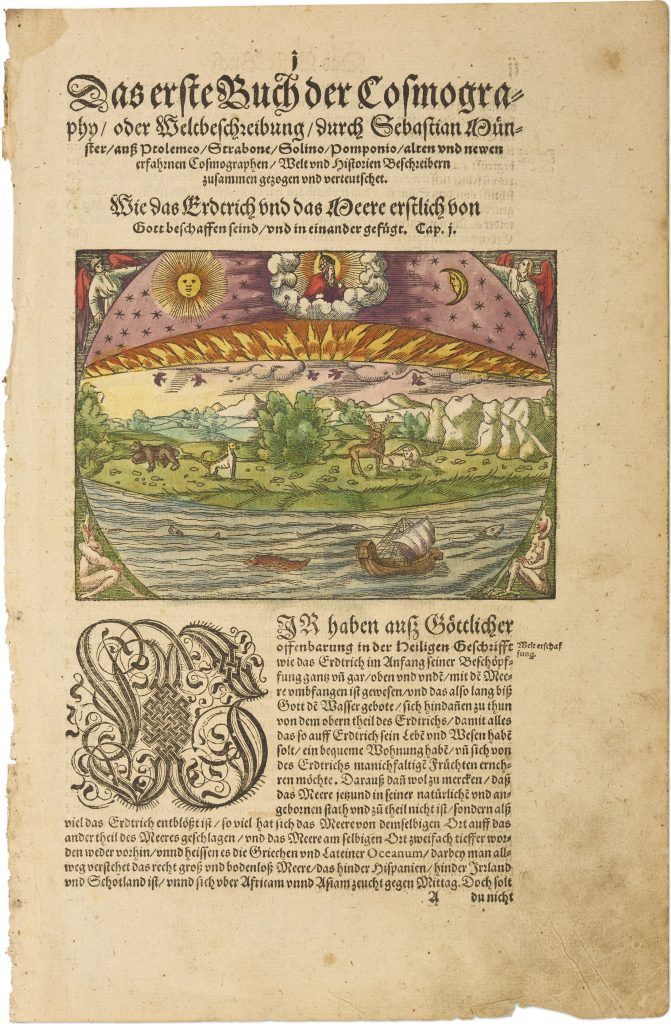
Sebastian Münster was a German humanist, Hebraist, cosmographer, and mapmaker based in Basel. His Cosmographia, first published in German in 1544, was a large illustrated description of the known world. From the 1550 edition, the work opened with an image of creation, placing geography within a biblical account of how the earth, seas, heavens, animals, and plants came into being.
This woodcut illustrates the ordering of the world by God. At the top, God appears as a bearded figure in the heavens, surrounded by clouds, with the sun, moon, and stars nearby and angels in the corners. Beneath the celestial realm is a band of fire, separating heaven from the newly formed earth below.
The lower part of the image shows the separation of land and water and the abundance of creation. Mountains, plants, birds, animals, sea creatures, and a sailing vessel populate the newly ordered world. The image therefore functions as more than a biblical illustration: it introduces the Cosmographia by presenting geography as part of divine creation.
Within the collection, this print is closely connected with Münster’s De Prodigiis & ostentis (390) and Meerwunder und Seltzame Thier (443), which also show how the Cosmographia joined world description with biblical history, natural history, marvels, and moral instruction.
Münster, Sebastian (1488–1552)
Cosmographia universalis, Basel: Heinrich Petri, 1550
1592, German edition
Woodcut
391
R1 Extremely rare - occasionally seen on the market