
Aqua
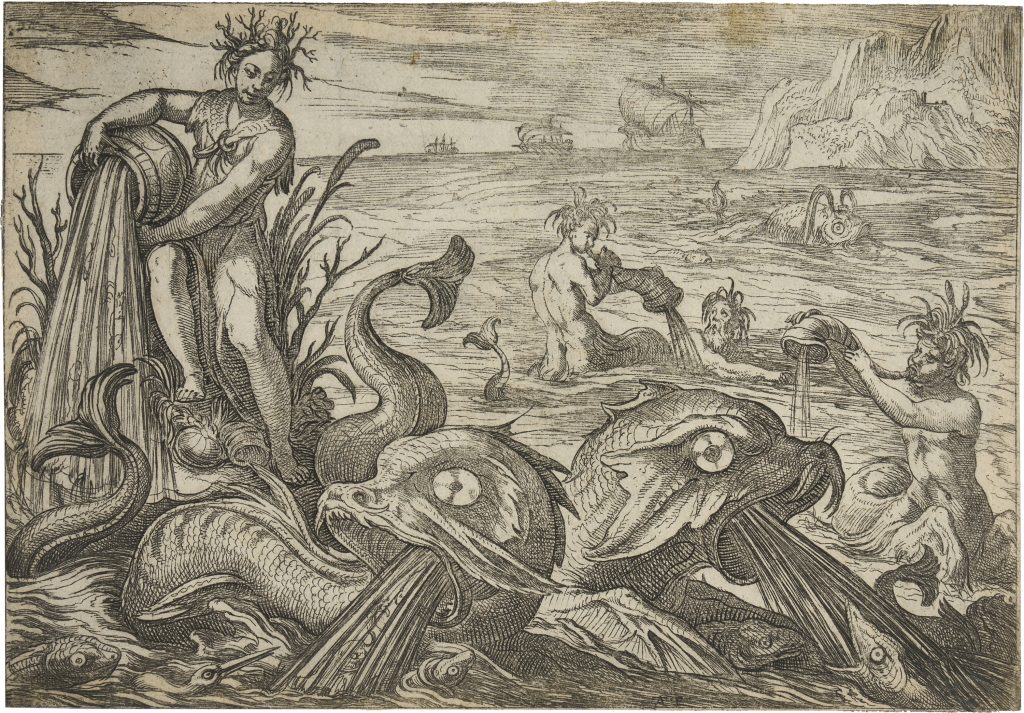
with Santi di Tito and was also a pupil of Johannes Stradanus, or Jan van der Straet, whose Antwerp print connections helped shape Tempesta’s interest in lively narrative, animals, hunts, mythological subjects, and allegory. This copper engraving, Aqva, or Allegory of Water, was first published in Rome in 1592.
The image personifies water through a mythological seascape. At left, a female figure pours water from a large vessel into the sea, while tritons and other water beings pour water from shells and jars. Fantastic marine creatures fill the foreground, their bodies combining fish, reptile, and mammalian forms. Ships appear in the distance, and a rocky coast rises at right, linking the elemental subject to navigation, maritime danger, and the imagined life of the sea.
Rather than presenting water as a simple natural substance, the print treats it as an active and animate force. The sea is shown as generative, unpredictable, and inhabited by strange beings. This belongs to a wider early modern visual culture in which the four elements were represented through allegory, mythology, natural history, and wonder.
Tempesta, Antonio (1555–1630)
Rome: Antonio Tempesta, 1592
1592
Copperplate engraving
439
R1 Extremely rare - occasionally seen on the market