
The four elements
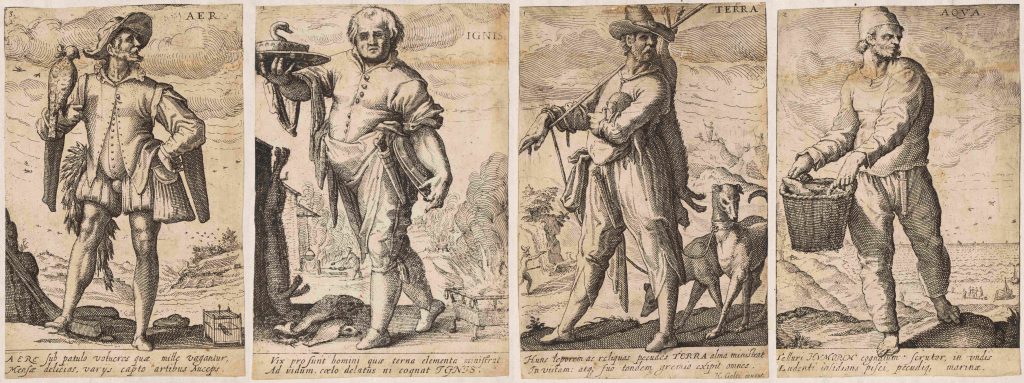
Hendrick Goltzius was one of the most influential Netherlandish print designers of the late sixteenth century, and his compositions circulated widely through engraved series. This set of four engravings represents the classical elements: Terra (Earth), Aqua (Water), Aer (Air), and Ignis (Fire). Each image treats its element through human activity and natural abundance, combining allegory, landscape, animals, and Latin verse.
Terra shows a hunter with two dogs in a mountainous landscape. The accompanying verse reads: Hunc leporem ac reliquas pecudes Terra alma ministrat / In victum: atq suo tandem gremio excipit omnes — “Kind Earth provides the hare and other animals for sustenance, and finally receives them all back into her bosom.” Earth is presented as both nourishing and all-receiving. Aqua shows a fisherman standing at the shoreline with a basket of fish, looking out toward the sea, with boats and small figures in the distance. The verse reads: Telluro humorem cognatum servato, in undis / Ludenti insidians pisci, pecudiq marinae — “Keep the moisture kindred to the earth, as he sets traps for the playful fish and other sea creatures in the waves.” Water is associated with fishing, marine life, and human dependence on the sea.
Aer presents a birdcatcher capturing birds in the open air. The verse reads: Aere sub patulo volucres quae mille vagantur, / Mensae delicias, varijs capto artibus auceps — “In the open air, where a thousand birds wander, the birdcatcher captures delicacies for the table with varied skills.” Air is represented through movement, flight, hunting, and appetite. Ignis reflects on the indispensability of Fire. Its verse reads: Vix prosunt homini quae terna elementa ministrant, / Ad victum, coelo delatus ni coquat Ignis — “Hardly do the three elements provide for man’s sustenance unless Fire, sent down from heaven, prepares it for consumption.” Fire is therefore shown as the element that transforms the gifts of Earth, Water, and Air into food.
Together, the four engravings present the elements as physical substances, sources of livelihood, and parts of a moralised natural order. Within the collection, this series is closely connected with other allegorical and cosmographical prints that organise knowledge through personification and learned imagery, including Geometria after Frans Floris (242) and The Seven Liberal Arts after Hendrick Goltzius (433).
Goltzius, Hendrick (1558–1617) after
1597
Copperplate engraving
339